It's an ablist world out there
Despite anti-discrimination laws, daily life is a struggle
7/3/20263 min read
This maybe a rant, apologies in advance if it does end up being that way
I've been watching a few documentaries lately, presented by people with disabilities and how life is.
Judgement, prejudice, abuse, lack of empathy, not seeing why they have to view things from your perspective. Just a view common themes the presenter received from others. Abuse on social media, including death threats. When reported, the social media platform does.....nothing. I don't understand why some people fear difference.
I have this strange paradox when meeting someone for the first time. My instinct will lead to whether I want to communicate with them or not. The not is easy, I shutdown and/ or walkaway. If I do; what do I say? Are they open to talking? What will they say? What if I say something weird, or random? How much masking do I need to do? Can I sit and talk, or do I need to pace?
This is face to face, in person. Now, lets make this a telephone call. Take all of the above and add:
What mood are they in? Will they be friendly? Will they have an aggressive, authoritarian tone? How much background noise will they be? What sort of room are they in? How people are around them? Will the reception be good enough for me to understand them? How quickly will they talk? What if I don't understand what they're saying, do I say something? How long will the call last? Will they ask me questions, or expect me to do most of the talking? When will I know when to stop talking?
This is why if the neurodivergent person in your life doesn't want to talk on the phone, it's not because they don't want to talk to you, it just means we have to do all that processing, every second. If we can achieve it, expect us to need a few hours to recover.
The reason for the title, it sums up the problem we face. Even our 'advocates' are ablist in majority, if they are any disabled members, they're very few and have no real voice. Here's a really strange and out there idea, how about disabled people are given the facilities currently provided to these 'focus groups, 'think tanks, 'committees', etc, and given a voice to be able to make change. But change what WE need, not what an ablist person thinks we need.
I feel the same has happened during much of my mental health 'care'. The number of professionals, who make a diagnosis after 20 minutes, or even before we've met, is all but one. There is a genuine lack of knowledge in the profession and getting someone who will listen first is very rare. Again, it comes down to dismissal. You're too difficult, here's some pills, and go away. As someone with complex trauma and various comorbidities, a quick, sealed under one label, is clearly ridiculous. However, this requires time, patience, and someone with the knowledge to walk through the paths of your mind to help you understand what the hell is going on. Unfortunately, to get this kind of help, currently and I can't see it changing, you have to go private.
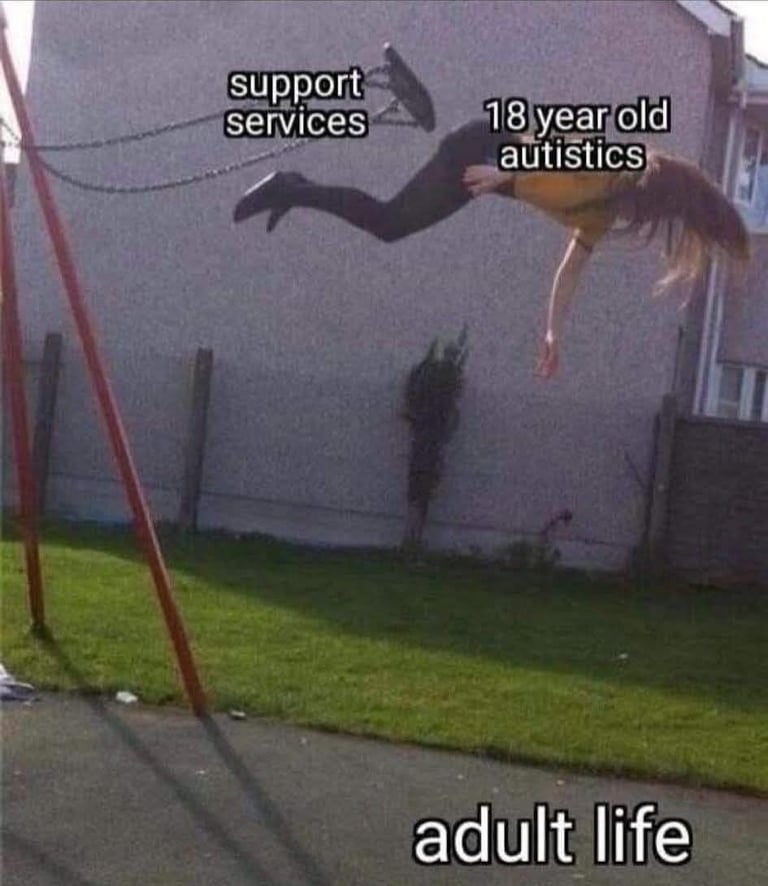
Again, disabled person needs something, a genuine need, to give them the same life others take for granted, and you have to pay. Can someone explain the logic in making life financially more difficult for people who are already finding life difficult, because of an accident of birth? It's your fault you were born disabled, different. As the picture demonstrates there's a drop when a child reaches 18. All child support services disappear, you're not a child anymore. Adult support services. A system designed to make it virtually impossible to get help. You can't claim for this unless you've got that.
People find the unemployment figures, reduction in life expectancy, suicide rates, chronic conditions, surprising. I wonder why?